I love tangents in class. Yes, you heard me correctly: I love tangents in class.
Sometimes I learn more about my students in these situations than in any other, and sometimes we all learn a bit more about life than we could have done during the normal lesson.
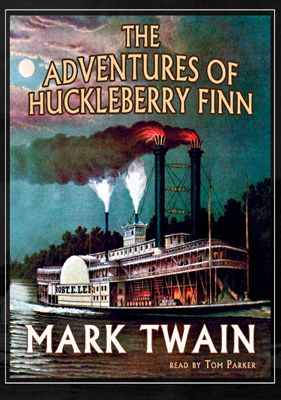
Today while discussing the scene in The Adventures of Huckleberry Finn where some townspeople exhume a body, students began asking unusual questions.
"How bad would the body be when they dig it up?"
"Is it true that the hair and nails grow when you die?" (I enjoy watching the kids' faces when myths are debunked.)
"What is left when a body is cremated?"
"How much is left after cremation?"
"Where did cremation start?"
(Oddly enough and maybe eerily enough, I just watched a program about cremation a few weeks ago on The History Channel, so I could answer many of these questions.)
This led to a discussion about why people choose burial over cremation and vice versa. Also, we discussed how (sub)urban myths begin and what a few are. Finally, we discussed how the exhumation scene could become a part of a CSI episode and how the frauds (the king and duke as the Wilks brothers) could be exposed today and how they could succeed in conning a family. All this in the final 30 minutes of class!
What a great day! The kids were engaged, they asked questions, they bounced ideas back and forth, and we all learned about one another. While we may have strayed from my intended discussion items, the kids thought critically, explored deeply, and decided to research the topic some more.
I wish I had inspired them myself, but I'll take true and honest curiosity any day.
Showing posts with label American Authors. Show all posts
Showing posts with label American Authors. Show all posts
Thursday, November 15, 2007


Monday, October 1, 2007
Books Right Now
Here are the books I'm teaching right now:
American Literature: The Adventures of Huckleberry Finn by Mark Twain
American Survey: Fools Crow by James Welch
Mythology: Mythology by Edith Hamilton
Sophomore Honors: A Tale of Two Cities by Charles Dickens
We finish Twain, Welch, and Dickens this week. I just love when Carton mounts the steps to the guillotine and says, "It is a far, far better thing that I do, than I have ever done; it is a far, far better rest that I go to than I have ever known." It gets me every time, and this line hooks the kids for good. They never forget it. What a finish!
American Literature: The Adventures of Huckleberry Finn by Mark Twain
American Survey: Fools Crow by James Welch
Mythology: Mythology by Edith Hamilton
Sophomore Honors: A Tale of Two Cities by Charles Dickens
We finish Twain, Welch, and Dickens this week. I just love when Carton mounts the steps to the guillotine and says, "It is a far, far better thing that I do, than I have ever done; it is a far, far better rest that I go to than I have ever known." It gets me every time, and this line hooks the kids for good. They never forget it. What a finish!
Sunday, July 29, 2007
Say It Ain't So
My wife asked me the other day (paraphrased): "Isn't it just sad that Avril Lavigne could be the poet laureate of the current generation?"
Fortunately my wife was not standing in front of me when she said this because, first, I had to clean up the pop from across the room and next had to endure a sting in my nose for a few moments. Then, I had to sit and think: who really is the voice of this generation?
I did an activity with my kids this year (not totally mine, but still a good one) where they created a list of all of the current people who would be included in the history books from the 1990s and 2000s. They came up with the Clintons, the Bushes, Dick Cheney, Paris Hilton, Brad Pitt, Stephen Hawking, Angelina Jolie, Condoleeza Rice, J.K. Rowling, Harry Reid, and then local Washington politicians and some top 40 musicians.
We then compared and contrasted this list with the famous names in the history sections of the literature book. What did the kids discover after complaining that history is composed primarily of rich, white people? Their list was comprised primarily of rich, white people. It truly shocked them. They didn't see this result coming.
Granted, they included more actors and musicians than the history sections but the point was made: they view history much like the writers of their textbooks and as Americans have for generations.
Now comes my task: what do I do to help them find the voices of their generation? How do I help them find a diversity of voices while still completing the assigned curriculum for the courses I teach? How do I help them to foster an understanding of what is image and what is substance in contemporary literature?
Over the course of this year, as I learn the new course I'm teaching, I want to identify where I can include contemporary voices or how I can help them discover voices of substance on their own.
Fortunately my wife was not standing in front of me when she said this because, first, I had to clean up the pop from across the room and next had to endure a sting in my nose for a few moments. Then, I had to sit and think: who really is the voice of this generation?
I did an activity with my kids this year (not totally mine, but still a good one) where they created a list of all of the current people who would be included in the history books from the 1990s and 2000s. They came up with the Clintons, the Bushes, Dick Cheney, Paris Hilton, Brad Pitt, Stephen Hawking, Angelina Jolie, Condoleeza Rice, J.K. Rowling, Harry Reid, and then local Washington politicians and some top 40 musicians.
We then compared and contrasted this list with the famous names in the history sections of the literature book. What did the kids discover after complaining that history is composed primarily of rich, white people? Their list was comprised primarily of rich, white people. It truly shocked them. They didn't see this result coming.
Granted, they included more actors and musicians than the history sections but the point was made: they view history much like the writers of their textbooks and as Americans have for generations.
Now comes my task: what do I do to help them find the voices of their generation? How do I help them find a diversity of voices while still completing the assigned curriculum for the courses I teach? How do I help them to foster an understanding of what is image and what is substance in contemporary literature?
Over the course of this year, as I learn the new course I'm teaching, I want to identify where I can include contemporary voices or how I can help them discover voices of substance on their own.
Thursday, July 26, 2007
A New Beginning
Finally, the local college has approved me to teach the College in the High School course for American Literature, which we call The Survey. This course meets Communications 240 and English 250 at the college, so I have to meet some very specific learning targets in order for my students to have a chance of earning the credits.
I am looking forward to teaching this course, not just because my passion is American literature, but because I like trying to teach a new course. I get to explore literature on my own. I get to teach myself this August, a rare opportunity indeed. Knowing that teachers are the worst students, I guess this means I get to be teacher and student; thus, my complaints about the students this August are all about me.
Truly, my only real concern about this course is that I must follow the timeline and exact teaching units of the instructor currently teaching this course. She is an amazing teacher, but we do have distinct style differences. I also cringe at the thought of having to follow someone else's plan. Is it my arrogance or just my free spirit? I hope the latter. Maye it just reminds me of the push elsewhere to have teachers be on the same page at the same time, stifling the creativity of the craft.
Still, after this first year I will be able to branch out and do my own thing.

I am flattered that a number of my Sophomore Honors students and parents have requested that I teach this course in the hopes we'll be together again. I also feel excitement that we now have enough students requesting this course to create three sections instead of the normal two. One teacher told me he thinks my wife (an English teacher at my same school) and I have helped with this, fostering a greater love for English in our students.
While I'd love to believe this to be the answer, I think the push for students to take higher level courses is a primary factor. We have an AVID program in our school, now in its third year, and we have a definite encouragement from the district and state to convince students to attempt higher level coursework. To be honest, I like seeing the kids challenge themselves in this way as well, not just to have a better looking transcript, but to see the students really want to explore (especially in English--my bias).
Anyway, I get to delve into the chronology of American literature beginning with Native American works through the modernists and possibly the post-modernists. We'll read contemporary pieces such as Fools Crow by James Welch, Fahrenheit 451 by Ray Bradbury, One Flew Over the Cuckoo's Nest by Ken Kesey, and The Crucible by Arthur Miller. Of course, we'll cover much of the canon, but I look forward most of all to exposing my students to more recently written texts. In the future, I hope to include even more.

I am looking forward to teaching this course, not just because my passion is American literature, but because I like trying to teach a new course. I get to explore literature on my own. I get to teach myself this August, a rare opportunity indeed. Knowing that teachers are the worst students, I guess this means I get to be teacher and student; thus, my complaints about the students this August are all about me.

Truly, my only real concern about this course is that I must follow the timeline and exact teaching units of the instructor currently teaching this course. She is an amazing teacher, but we do have distinct style differences. I also cringe at the thought of having to follow someone else's plan. Is it my arrogance or just my free spirit? I hope the latter. Maye it just reminds me of the push elsewhere to have teachers be on the same page at the same time, stifling the creativity of the craft.
Still, after this first year I will be able to branch out and do my own thing.

I am flattered that a number of my Sophomore Honors students and parents have requested that I teach this course in the hopes we'll be together again. I also feel excitement that we now have enough students requesting this course to create three sections instead of the normal two. One teacher told me he thinks my wife (an English teacher at my same school) and I have helped with this, fostering a greater love for English in our students.
While I'd love to believe this to be the answer, I think the push for students to take higher level courses is a primary factor. We have an AVID program in our school, now
 in its third year, and we have a definite encouragement from the district and state to convince students to attempt higher level coursework. To be honest, I like seeing the kids challenge themselves in this way as well, not just to have a better looking transcript, but to see the students really want to explore (especially in English--my bias).
Anyway, I get to delve into the chronology of American literature beginning with Native American works through the modernists and possibly the post-modernists. We'll read contemporary pieces such as Fools Crow by James Welch, Fahrenheit 451 by Ray Bradbury, One Flew Over the Cuckoo's Nest by Ken Kesey, and The Crucible by Arthur Miller. Of course, we'll cover much of the canon, but I look forward most of all to exposing my students to more recently written texts. In the future, I hope to include even more.
Subscribe to:
Posts (Atom)